


What to Consider When Selecting Decorative Light Poles
From enhancing the walkability in downtown areas to preserving historic aesthetics, the right light pole can significantly impact the look and feel of a community. Several factors come into play when choosing a decorative light pole, including specific applications, height, material, available design options, and compliance requirements. Our guide will help you understand these factors so you can make an informed decision for your project.
What Defines a Decorative Light Pole?

A decorative light pole is where utility meets aesthetics. These light poles are designed to complement architectural themes and enhance streetscapes, making them ideal for residential communities, municipal, campus, and mixed-use developments. What sets decorative light poles apart from their more utilitarian counterparts are their distinctive, often ornate features. These can include fluted shafts, custom finishes, and elaborate shrouds that contribute to their overall appearance.
What Applications Are Decorative Light Poles Best For?
Decorative light poles and lamp posts are versatile and used in various settings to enhance both functionality and visual appeal. They are great for historic districts, helping to maintain charm and elegance while offering modern lighting solutions. Decorative light poles are also great for parks and walkways, blending lighting solutions with the landscape, transforming these spaces into welcoming and safe environments at all times of the day. Campuses, residential communities, and plazas can also use decorative light poles to unify large areas under a single design style.
How Tall Should Decorative Light Poles Be?
The height of your decorative light pole drastically impacts its effectiveness. For residential and pedestrian areas, light poles typically range from 9 to 14 feet. In commercial settings, light poles are generally taller, ranging from 12 to 16 feet, to ensure broader light distribution and better visibility.
The height of the light pole can also impact its compatibility with decorative shrouds, with taller light poles often requiring more robust bases for stability and aesthetic appeal. For more information on choosing the right height, we recommend reading our guide on how to select the right light pole height.
What Material Is Best for Decorative Light Poles?
When it comes to materials, Hyperia’s composite decorative light poles offer several advantages over traditional steel or aluminum options. Composite fiberglass is lightweight yet durable, making it easier to transport and install without compromising performance. These poles are also rust and corrosion-resistant, making them a perfect choice for harsh environments where exposure to moisture and salt is common.
One of the standout features of Hyperia’s light poles is their minimal maintenance requirements. Unlike steel or aluminum, composite fiberglass does not require frequent upkeep, which translates to long-term time and cost savings. Additionally, these poles are non-conductive and safe for use in public areas, reducing the risk of electric shocks.
What Design Options Are Available for Decorative Poles?
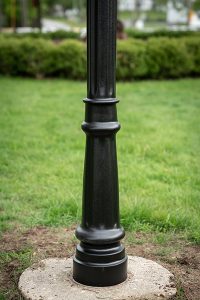
There are many design options for decorative light poles, providing flexibility and customization for your project. You can choose between fluted and smooth shafts, ornamental bases, scroll arms, finials, and banner brackets for holding decorative flags.
Additionally, Hyperia offers five standard colors and custom color-matching options, ensuring the light poles can blend seamlessly with any outdoor aesthetic. Whether you’re aiming for a modern, traditional, or historic look, Hyperia’s design options allow you to create a cohesive and visually appealing streetscape.
How to Ensure Compliance and Durability
Understanding the regulations and zoning requirements, like wind-load compliance, is essential when selecting decorative light poles for your project. These standards ensure that the poles meet safety and performance criteria specific to your location, helping to prevent hazards in public spaces. Being aware of and adhering to these compliance factors not only safeguards the community but also guarantees the reliability of the light poles over time, making them a smart and responsible choice for any installation.
Why Choose Hyperia for Decorative Light Poles
Hyperia stands out in the market for its handcrafted decorative light poles, which are built to elevate both design and performance. Hyperia’s composite fiberglass poles offer a unique combination of strength, durability, and visual appeal. For a timeless decorative touch to streetscapes, campuses, or historic projects, Hyperia’s Athena Series offers a range of options. With fully customizable finishes and color-matching capabilities, Hyperia delivers light poles that perform beautifully for decades. Explore the Athena Series to find the perfect light pole that meets your needs and exceeds your expectations.
Frequently Asked Questions
What is the purpose of Hyperia’s Athena Series of decorative light poles?
The purpose of Hyperia’s Athena Series of decorative light poles is to enhance aesthetic appeal by offering a beautiful and historic appearance suitable for campuses, parks, and commercial environments.
What styles are available for the Athena Series light poles?
The Athena Series light poles are available in both anchor base and direct bury styles. This variety enables you to select the most suitable installation method for your specific needs.
What height options are available for the Athena Series light poles?
The Athena Series light poles are available in heights ranging from 6 feet to 16 feet.
Can custom shrouds be made for the Athena Series light poles?
Yes, custom shrouds can indeed be made for the Athena Series light poles upon request to meet specific design requirements.
Are there options for finishes and colors for the Athena Series light poles?
Yes, the Athena Series light poles offer a variety of finishes and colors, including custom options upon request.

Follow Us!