


Selecting Light Poles for Coastal Areas
Light poles in coastal environments face challenges that standard installations don’t. Salt, high humidity, extreme winds, and storm surge exposure can degrade ordinary poles quickly. This creates safety hazards, costly replacements, and ongoing maintenance headaches for property managers and municipalities alike. Selecting the right coastal light pole from the start protects your investment and keeps your lighting solution performing for decades. This guide walks through the key factors to consider when choosing light poles for coastal locations.
Why Coastal Environments Need Superior Light Poles
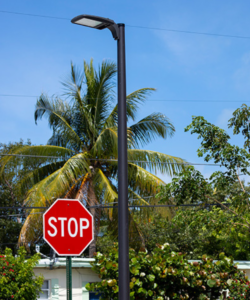
A light pole that performs reliably in a landlocked parking lot or a mild-climate streetscape may fail prematurely on the coast. The combination of salt, high winds, and moisture creates an environment that corrodes metal poles, compromises structural integrity, and increases maintenance costs over time. Any coastal project, whether it’s beachfront boardwalks, marina facilities, waterfront commercial developments, or coastal towns, require poles engineered to withstand these conditions.
Have any questions? Contact our experts today.
What Material is Best for Coastal Light Poles?
Material selection is the most important decision for a coastal lighting project. The two most common alternatives to composite, steel and aluminum both carry significant drawbacks in these environments.
Steel poles are highly susceptible to rust and corrosion, even when coated or galvanized. The salt in the air accelerates this process, often causing visible deterioration well before the end of an expected service life. On the other hand, aluminum poles can oxidize and pit over time, on top of being conductive.
Composite fiberglass light poles are the superior choice for coastal installations. Composite fiberglass is corrosion-resistant, and it doesn’t rust, pit, or oxidize. It is also non-conductive, which eliminates electrical safety risks associated with metal poles. Since composite fiberglass requires no protective coatings to resist corrosion, there is no paint or galvanization to chip, flake, or degrade over time. For more information on how composite fiberglass compares to other materials, we recommend reading our article on the advantages of composite light poles.
How Important is Wind Rating for Coastal Light Poles?
Coastal regions are subject to high sustained winds and hurricane-force gusts that can topple poles, damaging surrounding infrastructure and creating many safety hazards. When considering your lighting solution, you will need to evaluate your location’s wind speed. We recommend reading our guide on how to select a wind resistant light pole for more information.
What Height Should Coastal Light Poles Be?
Height requirements for coastal applications vary depending on the specific use case. Beachfront boardwalks and pedestrian promenades typically call for poles in the 10-to-16-foot range, providing adequate illumination without overwhelming a waterfront setting. Marina facilities, coastal parking areas, and waterfront commercial properties may require poles from 20 to 30 feet for broader coverage. Coastal roadways and highway applications can require poles up to 40 feet.
For a deeper dive on this topic, see our guide on selecting the right light pole size. Additionally, our team of experts can help you identify the right light pole for your specific project, so give us a call!
What Light Pole Design Options Are Available?
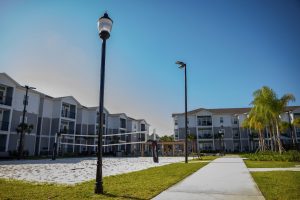
Waterfront downtowns, resort communities, boardwalks, and marina developments all benefit from lighting that enhances the visual character of the location — not just illuminates it. Hyperia’s composite fiberglass light poles are available in a wide range of colors and finishes. For a more decorative coastal application, our Athena decorative series offers beautiful styles and shroud combinations. For a commercial project looking for a modern light pole, our Eos series is available in both tapered and straight round configurations.
Why Hyperia Light Poles Are the Best Choice for Coastal Installations
Hyperia light poles are built for the coast. Our composite fiberglass poles are hand-crafted in New Hampshire, engineered to handle the toughest conditions along America’s shorelines. They won’t rust, corrode, or pit, can withstand high wind loads, require minimal maintenance, and hold their appearance for decades – everything a coastal installation demands. Whether your project is a beachfront boardwalk, a waterfront commercial development, a coastal parking facility, or a Gulf Coast municipality, Hyperia has the pole, the wind rating, and the engineering support to get it done right. Contact our team today to discuss your coastal lighting project and get expert guidance on the right pole for your location.
Contact Us For More Information
Frequently Asked Questions
What is the best light pole material for coastal areas?
Composite fiberglass is the best material for coastal light poles. Unlike steel and aluminum, composite fiberglass does not rust, corrode, or pit. It is also non-conductive, making it safer in wet coastal conditions, and requires no protective coatings that can degrade over time.
Can composite fiberglass light poles withstand hurricane-force winds?
Yes. Hyperia’s Eos Series composite fiberglass light poles are engineered across a wide range of EPAs and wind zones, including high-wind coastal zones.
Should I use anchor base or direct burial light poles for a coastal project?
Both methods can be used in coastal installations, but anchor base systems are often preferred in sandy or saturated coastal soils because the reinforced concrete footing provides greater stability. The right choice depends on site-specific soil conditions, water table depth, and project requirements.

Follow Us!